6-Day Kilimanjaro Conquer the Marangu Route

From $3011
/ Adult
  • Unbeatable Value Assurance - ( Discover extraordinary adventures )
  • Effortless Reservation Process - ( No booking hassles )
  • Transparent Pricing, Zero Surprises - ( No hidden costs )
  • Expertise Beyond Measure - ( Team of seasoned experts )
  • Your Joy, Our Priority - ( Happiness Commitment )

Overview

Experience the beauty and ease of the Marangu Route on Kilimanjaro. Ideal for those with health concerns, this less challenging climb offers breathtaking scenery and a high success rate. Perfect for all adventurers, the Marangu Route provides an accessible and rewarding path to the summit. Enjoy the stunning landscapes and the sense of achievement as you conquer Kilimanjaro's peak.

Day By Day

Morning departure from Arusha to Lake Manyara National Park.

Begin your journey with a transfer from your hotel to the Marangu Gate at 1,800 meters. After completing formalities, embark on a gentle 9km hike through the enchanting rainforest to Mandara Hut. Take your time to hike slowly and quietly, capturing memories of the lush forest and spotting blue and Colobus monkeys swinging between the branches, feeding on leaves and fruits. Although it's an easy day, remember to respect the altitude by climbing slowly and staying hydrated. End your day with a hearty dinner and a cozy overnight stay in the huts.

Lunch, Dinner
Public Campsite

Start your day at 6:30am with hot tea served in bed, followed by a full breakfast at 7:30am. Depart at 8:00am and head towards Horombo Huts. After half an hour, you will emerge from the forest into the heather zone, where the trail becomes more regular. On clear days, enjoy breathtaking views of the Mawenzi and Kibo peaks. Covering a total distance of 15km, the hike takes up to 7 hours. Enjoy lunch along the way and end your day with dinner and an overnight stay in the huts.

After breakfast, depart for Serengeti National Park, the driving is via Arusha city to attractive high lying farmland of Karatu and up to Ngorongoro gate, after check in you will drive more up and along the Crater rim, you may stop for some nice pictures at the crater view point. More drive around the Crater rim and down to the “Wild rich” The Serengeti National Park with its endless rolling plains.
On the way you may visit one of the Masai village whereby some Masai warrior invites you & give you a brief story of their life around this area (optional). Later they will sing and dance their famous song which involving jumping high. From there drive further with en-route game drive to Naabi Hills Gate for check in before heading to the Central Serengeti Park area called Seronera. Picnic lunch will be served at the kopjes (Rocky outcropping). Afternoon game drive in search of the Wildebeest Migration, later drive to your camp during or before the sunset for dinner & overnight.

Breakfast, Lunch, Dinner
Public Campsite

Today is dedicated to acclimatization. Start your morning at 7:00am with a hot drink in bed, followed by a full breakfast at 8:00am. Enjoy a leisurely hike to the zebra rocks at 3,950 meters before returning to camp for lunch. Spend the rest of the day at the camp, relaxing and acclimatizing with dinner and an overnight stay in the huts.

Breakfast, Lunch, Dinner
Public Campsite

Wake up at 6:30am with a hot drink in bed, followed by breakfast at 7:30am. Begin your climb to Kibo through the heather and moorland zones, transitioning into the alpine desert and eventually a complete desert. The trek across the Saddle is light but can be exhausting. You might experience headaches in the Saddle, which should subside after some rest at the Kibo Huts. Remember to drink plenty of water and maintain a slow pace. End your day with dinner and an overnight stay in the huts.

Breakfast, Lunch, Dinner

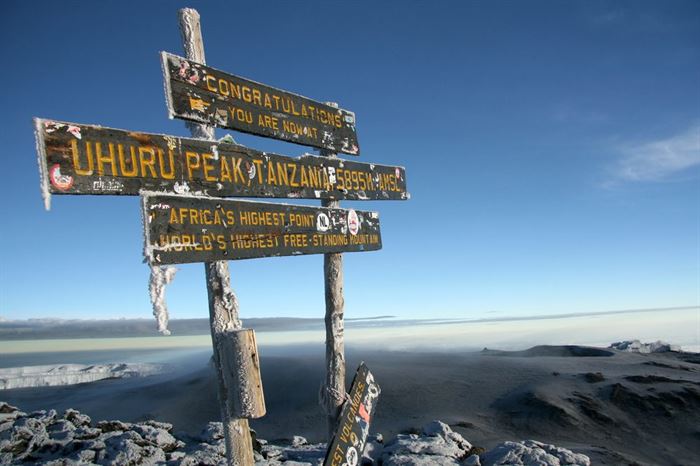
Wake up at midnight for a quick breakfast before embarking on a 7km summit attempt. The ascent begins gradually, becoming steeper as you climb through volcanic ash. After nearly 5 hours, you'll reach the first high point, Gilman’s Point, at 5,686 meters. The final stretch before Gilman’s Point is steep and rocky, requiring mental preparation and a positive mindset. From Gilman’s Point, it takes about 1.5 hours to reach the summit at Uhuru Point. After celebrating your achievement, descend easily back to Kibo base camp in under 2.5 hours, with some completing it in just 1.5 hours. Continue descending to Horombo Hut for your last night on the mountain.

Breakfast, Lunch, Dinner

Wake up at 6:30am and enjoy breakfast at 7:00am. Begin your descent at 7:30am, stopping at Mandara Hut for a hot lunch. Proceed to Marangu Gate for a short ceremony with your team, where diplomas will be awarded to mark your successful climb. Afterward, bid farewell to your team and embark on your onward journey.

Breakfast, Lunch

Cost Include

  • Porterage
  • Rescue fee
  • Park fees (For non-residents)
  • All activities
  • (Unless labeled as optional)
  • All accommodation (Unless listed as upgrade)
  • A professional driver/guide
  • All transportation (Unless labeled as optional)
  • All Taxes/VAT
  • Meals (As specified in the day-by-day section)
  • Drinking water (On all days)

Cost Exclude

  • Climbing gear
  • International flights (From/to home)
  • Roundtrip airport transfer
  • Additional accommodation before and at the end of the tour
  • Tips
  • Personal items (Souvenirs, travel insurance, visa fees, etc.)Government imposed increase of taxes and/or park fees

Frequently Asked Questions

Where is Kilimanjaro?

The mountain is in Tanzania, East Africa, about 350km from the equator. The nearest towns are Moshi and Arusha.

How high is it?

Mount Kilimanjaro is the highest freestanding mountain in the world and the highest mountain in Africa. Its highest point is Uhuru Peak on the Kibo crater at 5895m above sea level.

What kind of experience do I need?

None, but previous hiking or climbing experience will help. You need to be fit and healthy and have a good pair of worn-in hiking boots. The fitter you are the more you are likely to enjoy it.

What gear do I need?

You don’t need mountain climbing gear. You can rent most of the clothing and equipment you need in Tanzania, but bringing your own clothes, well worn-in boots and a good sleeping bag is best. You will need a small day pack with enough space for wind and rain clothes, some first aid, 3 litres of water and snacks.

Warm clothes (fleece, wind and waterproof layers), good polarised sunglasses, sunscreen and a head lamp should be included in your packing list. You might prefer to use walking sticks and gaiters, but these can be rented from your trekking operator. Even thermal underwear and down jackets can be rented from us. If think you do not have the correct clothing and gear, please contact Kilimanjaro-Experience for advice.

Can I shower?

There are no bathrooms on Kili. Warm water will be supplied in a bowl and you will be able to wash your face and hands. For the rest you will use wipes. Toilets are simple, hole-in-the-ground types. Portable showers and toilets can be rented at some cost.

How long is the hike?

The shortest and toughest is the 5-day Umbwe route. Allowing extra days will help you to acclimatize better and improve your chances of reaching the summit. The easiest and most popular route is Marangu (can be done in five), but Kilimanjaro-Experience use six days for this route.

How much will it cost?

Getting to Tanzania and hiking up Kili is not cheap. But the once in a lifetime experience is worth every penny. Costs (usually quoted in USD) will depend on the tour operator and what you need. Luxuries such as portable toilets and glassware will cost more. Land costs should include transport to and from Kili, full board, porters, guides, cooks, national park fees and permits. Do not choose the cheapest operator, choose an operator who discloses all costs and who offers value for money.

Where does the water come from?

From the mountain. Porters collect water from the streams and it is boiled before use. This water will be used to fill your water canisters. You don’t need to use purification tablets, but it is recommended. Some operators offer bottled water – at extra cost as porters have to carry this up the mountain.

Do we sleep in hotels?

No. There are no hotels on the mountain and no cable cars to the top. You will most probably sleep in tents, or in basic huts if you take the Marangu route. Tents and sleeping mats are carried and set up by the porters. You do need to bring a very warm sleeping bag or rent it from Kilimanjaro-Experience.

Do we tip the hiking crew?

Yes, it is expected and much appreciated. The amount depends on the amount of days, but can range from $150 and $300 per hiker. Tips are pooled and shared amongst the crew. Bring US dollar bills.

How old should I be to make it to the top?

No person younger than 10 years is allowed according to Kilimanjaro National Park authorities’ rules. If 10 or older, they may only proceed as high as Horombo Huts (3700m) or Shira Camp (3900m) if they are accompanied by one of their parents. Kilimanjaro-Experience prefers its climbers to be 14 years and older when they attempt the summit. Climbers older than 70 years are required to show a medical certificate.

The oldest person on the mountain was Richard Byerley (84) of Washington State. He trained by climbing mountains, running and cycling. His tip? ‘Just go.’ Kilimanjaro Experience’s oldest guest was 79 years and 9 months and was from the Czech Republic.

Will I make it to the top of Uhuru peak?

A good level of fitness and a positive, determined attitude will ensure success. Also, you will need good support and the right gear.

You have a 50% chance – to make it or not. Of the 40 000 visitors Kili attracts each year, between 50 and 75% turn back before reaching the summit according a report by the International Mountaineering and Climbing Federation. The main reason for this is cold, dehydration and altitude sickness. You will increase your chances by choosing the right route, allow an extra day for acclimatising to the height, good protection against cold and good guides to help you acclimatise and pace yourself.

Request Tour

6-Day Kilimanjaro Conquer the Marangu Route